
Bay Area Taiwanese Biotechnology Association
(BATBA)
00 :8 1- 00 :10 , Sep 19, 2026 (SAT)
Computer History Museum
1401 N Shoreline Blvd, Mountain View, CA 94043
BATBA Annual Symposium
2026 US - Taiwan Bioscience Forum:
Advancing Precision Health through Transdisciplinary Innovation

Meet Our Speakers
Keynote Speakers

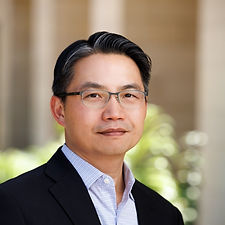
Lani Wu, Ph.D.
Professor of Pharmaceutical Chemistry,UCSF School of Pharmacy
Topic:
Aligning Heterogeneous Datasets to Accelerate Drug Discovery
Howard Chang, M.D., Ph.D.
Chief Scientific Officer and Senior Vice President of Global Research, Amgen
Topic:
AI enhanced drug discovery

Lani F. Wu, PhD, is Professor of Pharmaceutical Chemistry at the University of California, San Francisco, where she co-leads a multidisciplinary research program with Dr. Steven Altschuler. Trained originally as a mathematician, she began her academic career on the faculty of Princeton University before joining Microsoft Research, where she helped develop machine learning approaches for human–computer interaction. She later transitioned to systems biology and has become a leader in applying quantitative, computational, and experimental approaches to understanding complex biological systems. Her research focuses on cellular heterogeneity, cell-state transitions, disease mechanisms, and drug discovery, integrating high-throughput experimentation, imaging, data science, and mathematical modeling. Dr. Wu was an early member of the Harvard Bauer Fellows Program and a founding faculty member of the Green Center for Systems Biology at UT Southwestern, and has served as visiting faculty at Google Brain. She is a co-founder of Nine Square Therapeutics. Across her work, she brings mathematics and machine learning to bear on cell biology and drug discovery, and is deeply committed to mentoring the next generation of scientists.

Dr. Howard Y. Chang is a renowned physician-scientist, molecular biologist, and the Senior Vice President of Global Research and Chief Scientific Officer at Amgen. In his current role, Dr. Chang is pioneering a new paradigm in drug discovery by integrating artificial intelligence, machine learning, and automation into Amgen's generative biology platform. Under his leadership, Amgen has tripled the speed of protein engineering and cut discovery timelines in half, accelerating the delivery of life-changing therapeutics to patients worldwide. Prior to joining Amgen in 2024, Dr. Chang served as a Professor at Stanford University, holding joint appointments in dermatology, genetics, and pathology. He was also a Principal Investigator at the Howard Hughes Medical Institute. His foundational research has fundamentally advanced our understanding of the human genome. His laboratory pioneered the study of long noncoding RNAs and extrachromosomal DNA, revealing their critical roles in gene regulation and human diseases, including cancer. He is also the co-inventor of ATAC-seq, an indispensable epigenomic method that enables genome-wide analysis of the noncoding genome with unprecedented comprehensiveness and precision. Dr. Chang's contributions have been recognized with numerous prestigious honors, including the Albany Prize, the Lurie Prize in Biomedical Sciences, and the NAS Award in Molecular Biology. He is an elected member of both the National Academy of Sciences and the National Academy of Medicine. True to his conviction that "AI is a catalyst, not a replacement for science," Dr. Chang exemplifies the thoughtful, human-guided application of technology to medicine's most complex challenges.

Special Talk Speakers

Ying-Chih Chang, Ph.D.
Co-Founder and CEO,
Acrocyte Therapeutics Inc.
Topic: The R3CE Platform: Scaffold-Free Rare Cell Expansion for Multiomic Diagnostics and Regenerative Potential

Dr. Ying-Chih Chang is an Adjunct Professor of Chemical Engineering at Stanford University, Chair of the Stanford Taiwan Science and Technology Hub, and a Board Trustee of Kaohsiung Medical University, following a distinguished faculty career at UC Irvine and Academia Sinica's Genomics Research Center. Her core research focuses on cell-interfacial phenomena, with specific interests in biomimetic materials and assembly, leading to specialized applications in stem cells, regenerative medicine, and oncological tools for CTC isolation and expansion. This foundational work has culminated in two commercial spin-offs—CellMax Life (Sunnyvale, CA) and AcroCyte Therapeutics (San Carlos, CA), where she currently serves as CEO. She received her PhD from Stanford University and her BS from National Taiwan University, both in Chemical Engineering.

Co-Founder & CEO,
Algen Biotechnologies
Topic:
Revolutionizing therapeutic drug discovery through advanced CRISPR gene-modulation and AI
Dr. Chun-Hao Huang founded Algen, serves as the CEO with the mission to decode functional gene networks and radically transform patient outcomes. As a genetic engineer and drug developer, Chun-Hao pioneered disease-relevant models using CRISPR and RNAi, which led to the discovery of new therapeutic strategies for treating cancer and inflammatory diseases. He also applied machine learning to the study of gene functions and invented methods to identify biomarkers that predict drug responses. Chun-Hao conducted his postdoctoral research in Jennifer Doudna's lab at UC Berkeley, and received his PhD in Scott Lowe's lab at Memorial Sloan Kettering Cancer Center/Weill Cornell Medicine. He is the 64th Lindau Nobel Laureate Meeting Fellow, UN’s UNLEASH Sustainable Development Goals Talent, Innovators Under 35, and AACR Basic Cancer Research Fellow. He has authored over 10 patents filed or issued, 40 scientific papers, and 4,000 citations across top-tier journals.


Panel: Generative AI-From Model to Medicine

Jin Chen, Ph.D.
Vice President (Discovery Science) and Principal Investigator,
Altos Labs.
Jin Chen is Vice President of Discovery Science and a Principal Investigator at Altos Labs. His research aims to decode the regulators of development, aging, and disease. By combining cutting-edge functional genomics, CRISPR technologies, and large-scale perturbation screening, his laboratory develops new approaches to systematically map gene function and uncover the molecular circuits that govern cell fate. His team has pioneered innovative CRISPR-based technologies for genome-wide functional studies and helped reveal that the human genome encodes thousands of previously unrecognized proteins through widespread non-canonical translation, fundamentally expanding our understanding of the genome’s coding potential and uncovering a vast reservoir of previously hidden biology and potential therapeutic targets. Prior to joining Altos Labs, Dr. Chen was an Assistant Professor at the University of Texas Southwestern Medical Center. He completed his postdoctoral training with Jonathan Weissman at the University of California, San Francisco, and earned his Ph.D. at Stanford University under the mentorship of Jody Puglisi. His work has been recognized with numerous honors, including an NIH Pathway to Independence Award, an Endowed Scholar Award from UT Southwestern, a CPRIT Award, and selections for both the Searle Scholar Award and the NIH Director’s New Innovator Award, which he declined.

Andrew Chang, Ph.D.
CEO and Co-founder,
DeepSeq.AI

Andrew Chang, PhD, is the CEO and Co-founder of DeepSeq.AI. Originally trained in physics/biophysics, Andrew developed an expertise in protein engineering at Genentech, where he integrated first-principles physical modeling with large-scale biological screening assays. A winner of multiple international machine learning competitions, he has built his career on the conviction that data quality and scale are the ultimate arbiters of AI power. Andrew is recognized as one of the earliest pioneers in protein language modeling using hyperscaled DNA sequencing data. Prior to founding DeepSeq, he held senior engineering and research roles at Synthego and Karius, where he helped establish their foundational AI platforms. Under his leadership, DeepSeq has secured backing from DARPA, NSF, Merck DSS, Illumina Ventures, Stanford StartX, and other prominent institutions to build the next generation of biologics discovery systems.

Staff Software Engineer.
Engineering Lead of Genomics team at Google Research
Pi-Chuan Chang is an Engineering Manager in Google Research, leading the development of widely used, open-source AI genomics tools like DeepVariant and DeepSomatic. Since becoming the Tech Lead/Manager in 2018, she has helped guide these projects to become industry standards. Today, her team’s models serve as the accuracy engine for clinical diagnostics, global biodiversity initiatives, and top-tier Google Cloud partnerships. Focused on delivering high-precision science at Google scale, her work has contributed to landmarks like the first complete human genome and advanced cancer mutation detection.